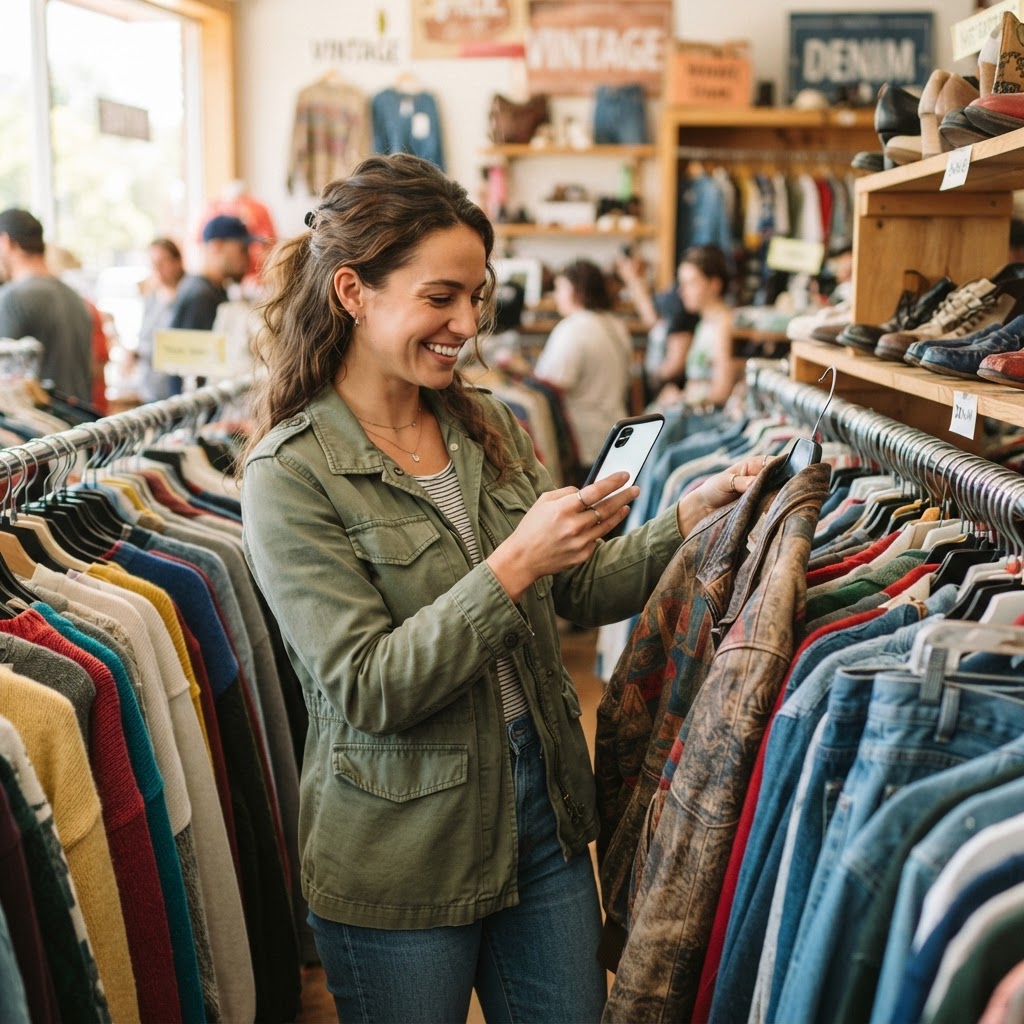
Vintage Identification Guide
Learn the labels, tags, and tell-tale signs that separate a $3 shelf find from a $300 resale.
Start Scouting FreeWhat makes an item "vintage"
In resale terms, "vintage" usually means at least 20 years old — but age alone doesn't make something valuable. What matters is brand, rarity, condition, and demand. A 30-year-old mass-produced mug is still a $2 mug. A 30-year-old Patagonia fleece in your size is a different story.
This guide walks through the fastest ways to identify vintage finds in the wild — and how to skip the guesswork entirely.
Vintage clothing: the tell-tale signs
- Care labels. In the US, care instructions became mandatory in 1971. No care label? Likely older — and possibly worth more.
- Union labels. An "ILGWU" or "Made in USA" union tag often dates a garment to the 1970s or earlier.
- Tag typography and fabric. Older tags use specific fonts, materials, and country-of-origin labels that collectors can date precisely.
- Zippers. Metal Talon and early YKK zippers help date denim and jackets.
- Brand knowledge. Harley Davidson, early Nike, Carhartt, Pendleton, and band tees all carry strong resale demand once authenticated.
Housewares and collectibles
- Bottom marks and stamps. Maker's marks on ceramics, Pyrex model numbers, and glassware patterns are highly searchable — and searchable means priceable.
- Original packaging. Boxed items, especially toys and electronics, sell for a multiple of loose ones.
- Material. Real brass, sterling (look for "925"), and solid wood hold value; plated and composite usually don't.
Why identification is the hard part
You can't price what you can't name. A "vintage vase" search returns everything from $5 to $5,000. A search for the exact maker and pattern returns the three sales that actually matter. The value is in the specificity.
The problem: most thrift finds don't come with a handy label. You're working from a blurry stamp, a partial tag, or a hunch — and the clock is ticking.
How Thrift Scout makes identification instant
Instead of squinting at stamps and googling for an hour, Thrift Scout reads the item for you:
- Snap a single photo of the item.
- The AI recognizes the brand, model, and condition from labels, tags, and markings.
- It searches the right marketplaces for that exact item type.
- You get a sold-price range, demand level, and suggested listing price in seconds.
No more "is this the real thing?" panic at the rack. You'll know before you reach the register whether that find is worth the flip.
Quick vintage-spotting checklist
- Is there a care label? (No label = older, investigate further.)
- Is there a union or "Made in USA" tag?
- Can you read a brand name or maker's mark?
- Is the condition sellable — no major flaws, stains, or cracks?
- Does the style match a trending era (90s, Y2K, mid-century)?
If you checked most of those, scan it with Thrift Scout before you decide. Try it free — 5 scans on signup, no credit card.
Ready to start scouting?
Download Thrift Scout and scan your first item today.
Get Started Free