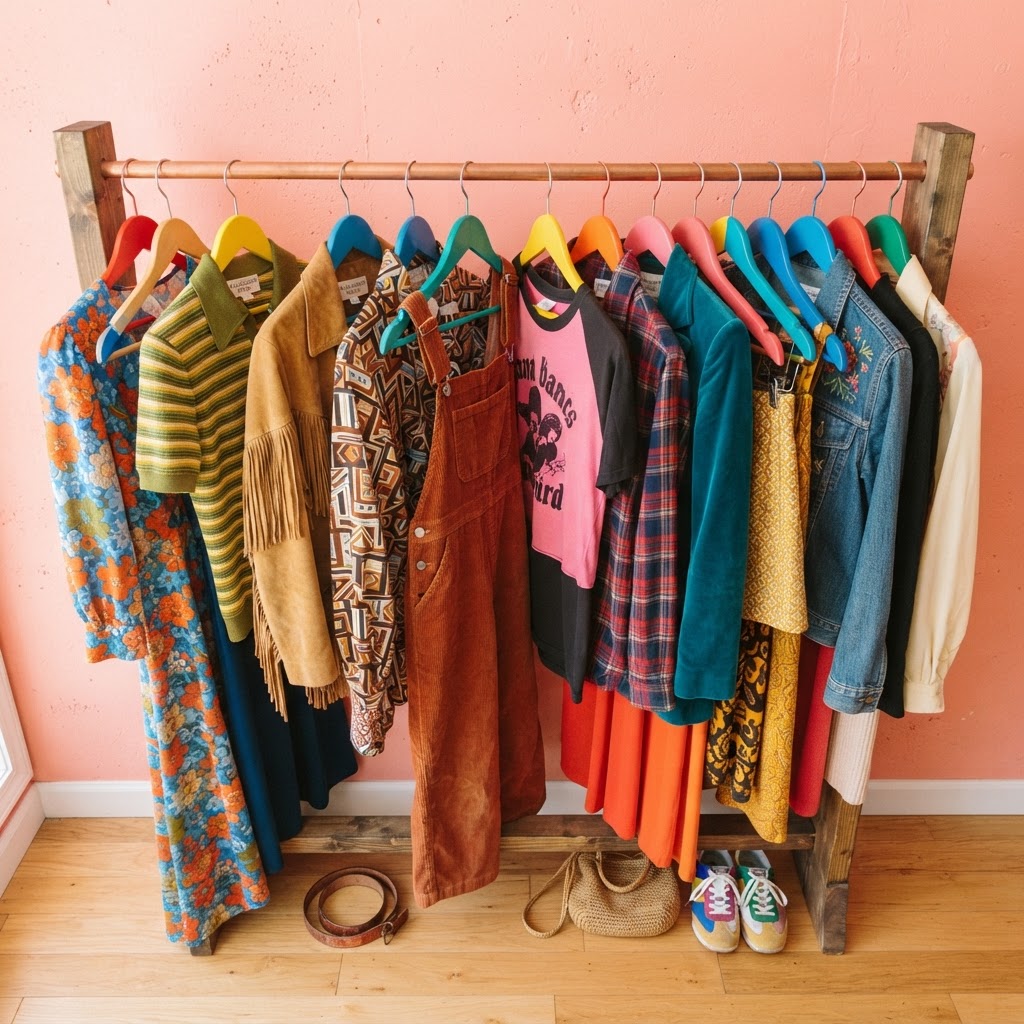
How to Flip Vintage Clothing for Profit
A practical reseller's guide to spotting, valuing, and reselling vintage clothing — with real sold-price data, not guesswork.
Start Scouting FreeWhy vintage clothing is a great flip
Vintage clothing has three things resellers love: low sourcing cost, strong buyer demand, and pieces that appreciate as trends cycle. A $4 thrifted 90s sweater can fetch $40–$120 on the right platform. The skill that separates profitable resellers from the rest is identification — knowing exactly what you're holding and what it sells for.
Step 1: Learn to spot vintage
Quick tells that a garment is likely vintage (20+ years old):
- No care label. US care-labeling became mandatory in 1971, so a missing care tag often means older.
- Union tags. "ILGWU" or "Made in USA" union labels point to the 1970s or earlier.
- Tag typography & country. Older brands use specific fonts, fabrics, and country-of-origin labels collectors can date.
- Zipper type. Metal Talon or early YKK zippers help date denim and jackets.
- Brand demand. Harley-Davidson, early Nike, Carhartt, Pendleton, Patagonia, band tees, and Y2K designers all carry strong resale value once authenticated.
Step 2: Price with sold data
"Vintage sweater" returns everything from $5 to $500. The exact brand + model + era returns the handful of sales that actually matter. Always:
- Filter to sold listings, not asking prices.
- Match the condition — a used piece shouldn't be priced off a "New" comp.
- Use the median sold price as your list price, with room to accept offers toward the low.
Step 3: Pick the right marketplace
- eBay — broadest buyer pool, best for most vintage.
- Etsy — strong for pre-2000 vintage and handmade-era pieces.
- Depop & Vinted — younger buyers, Y2K and 90s demand.
- Poshmark & The RealReal — designer and higher-end vintage.
- Instagram / your own audience — best margins if you have followers.
Step 4: Present and ship well
- Clean or steam before photographing.
- Photograph tags, labels, and any flaws honestly.
- Measure pit-to-pit and length — buyers return less when measurements are listed.
- Ship in a poly mailer with the garment folded around tissue to avoid creases.
How Thrift Scout speeds this up
Instead of squinting at tags and guessing the era, snap one photo and Thrift Scout:
- Identifies the brand, line, and likely era from labels and markings.
- Pulls sold prices from the marketplaces that matter for clothing (eBay, Poshmark, Depop, Vinted, Etsy, The RealReal).
- Returns a conservative low–high–average range and a suggested listing price.
You'll know before you reach the register whether that rack find is worth the flip.
Ready to start? Try Thrift Scout free — your first scans are on us.
Ready to start scouting?
Download Thrift Scout and scan your first item today.
Get Started Free